
A Museum Born in Crisis
El Gezirah
Community Museum
How a community in Wad Medani transformed a closed museum into a living centre of culture, healing, and heritage — in the middle of Sudan's worst conflict in a generation.
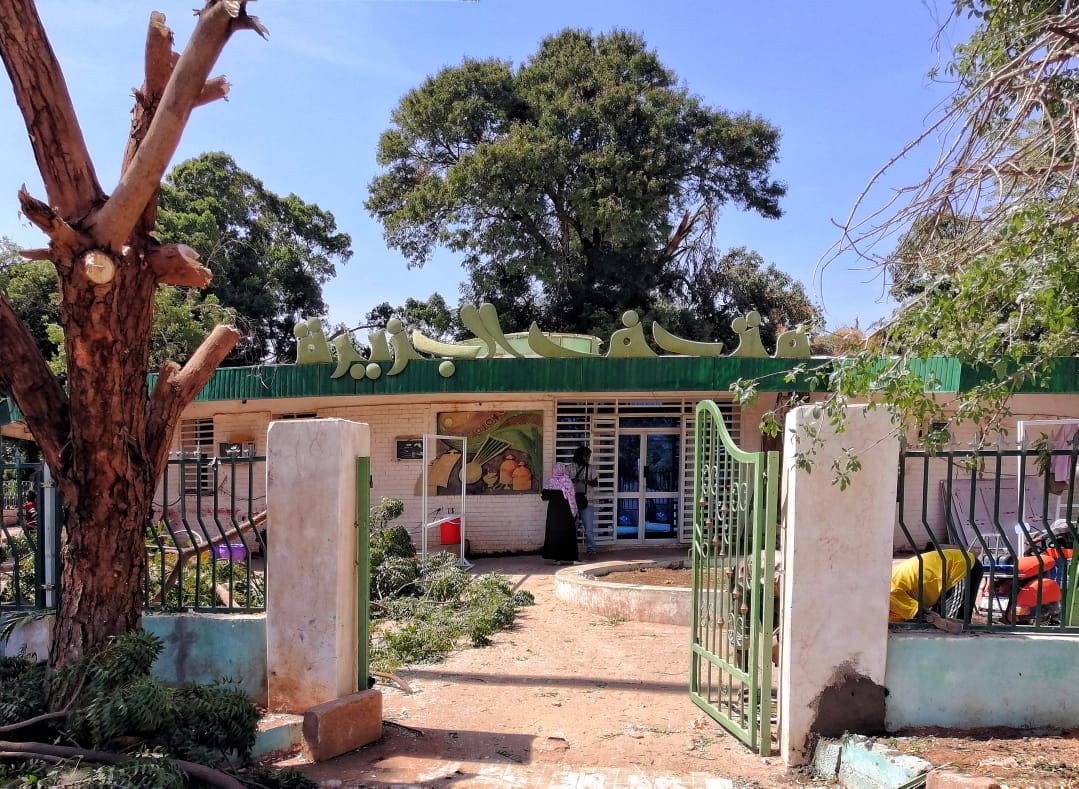
Where It Began
A Museum Reopened in War
When 1,000,000 Khartoum residents fled to Wad Medani in April 2023, the El Gezirah Museum became an unexpected anchor — a place for community, memory, and cultural survival.
The Crisis
A City Transformed Overnight
On 15 April 2023, the war in Khartoum sent one million residents fleeing southward to Wad Medani. The city — already home to the El Gezirah Museum — became a refuge for displaced artists, musicians, curators, and cultural professionals from across Sudan.
The museum had been closed for years. Within weeks of the displacement, SSLH identified it as the ideal site for a new community museum — one that could open within months, not a decade.
"A museum opened before ten years — to be reopened."
The Decision
Cairo Workshops — Identifying Wad Medani
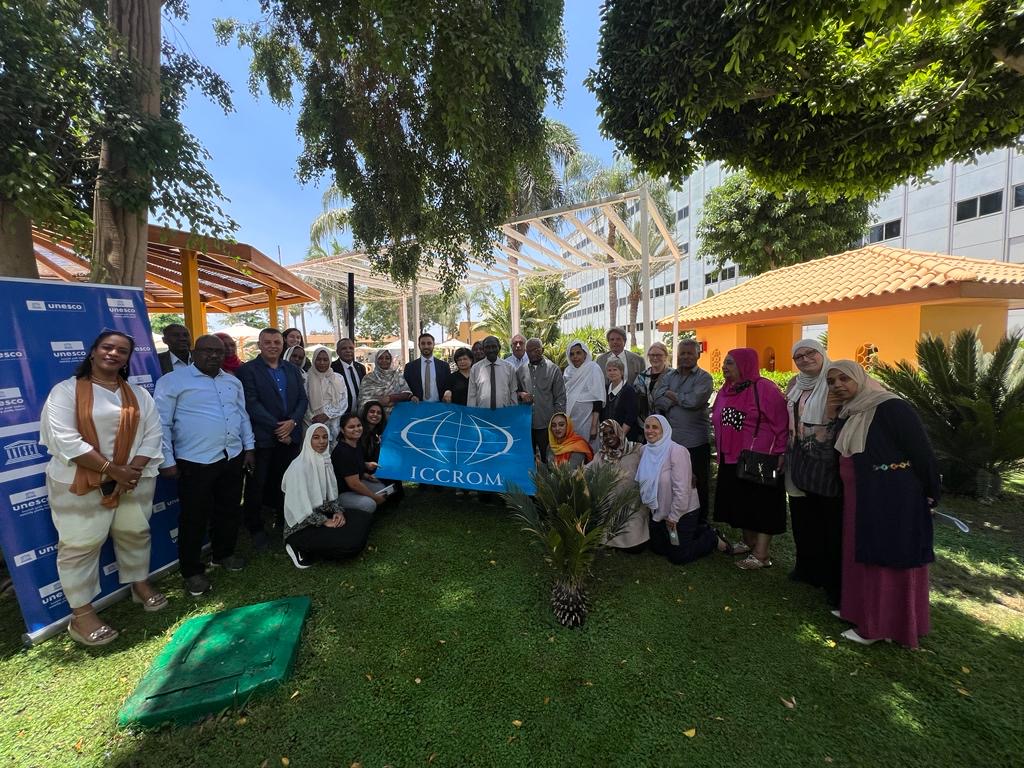
In June and July 2023, crisis committee workshops were held in Cairo with the NCAM (National Corporation for Antiquities and Museums). Wad Medani was identified as the safest viable location for a community museum — the displaced cultural community was already there.
Risk assessments were conducted. Surveys of the Sennar, El Gezirah, and Western Sudan museums were commissioned and completed by August. The plan was approved.
- June 6 — Cairo Workshop: Wad Medani identified
- July 8 — Second Workshop: Risk assessment approved with NCAM
- July 21 — Sennar Museum surveyed
- August 8 — El Gezirah Museum surveyed
- August 14 — AutoCAD drawings received
First Works
Restoring a Space for People
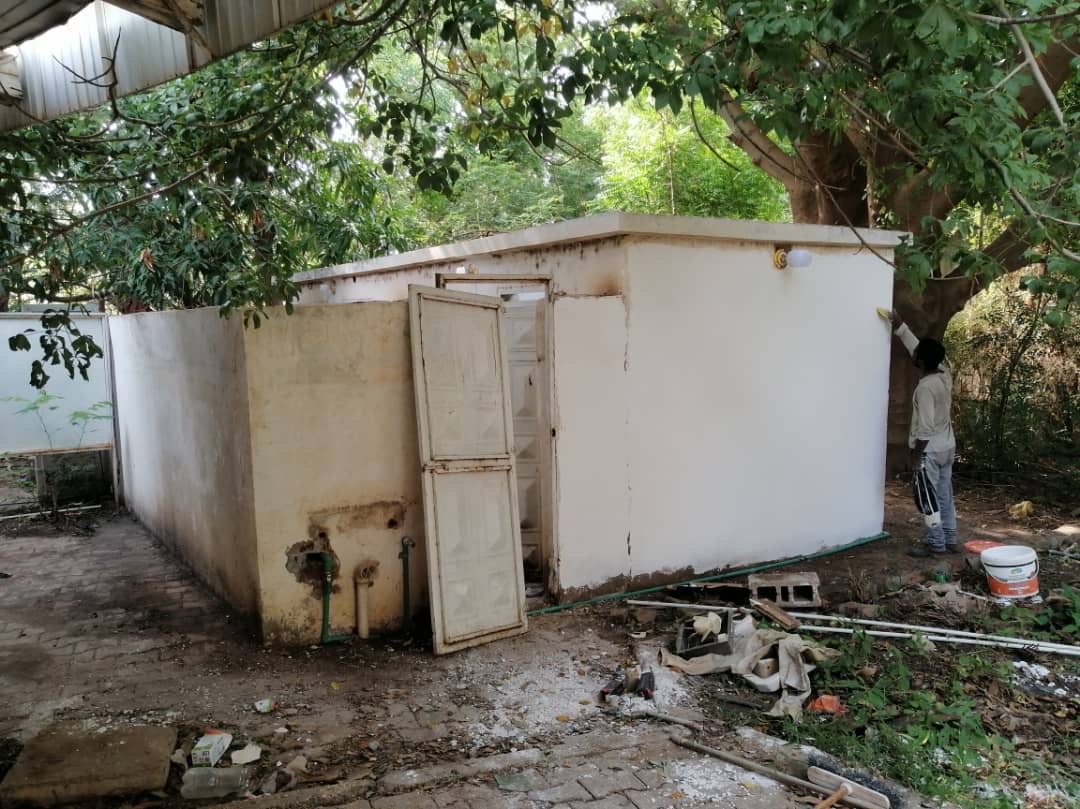
The first priority was basic infrastructure. Bathrooms were restored so that staff could use the building for daily work. A toilet block was completed by September and ready in under two weeks.
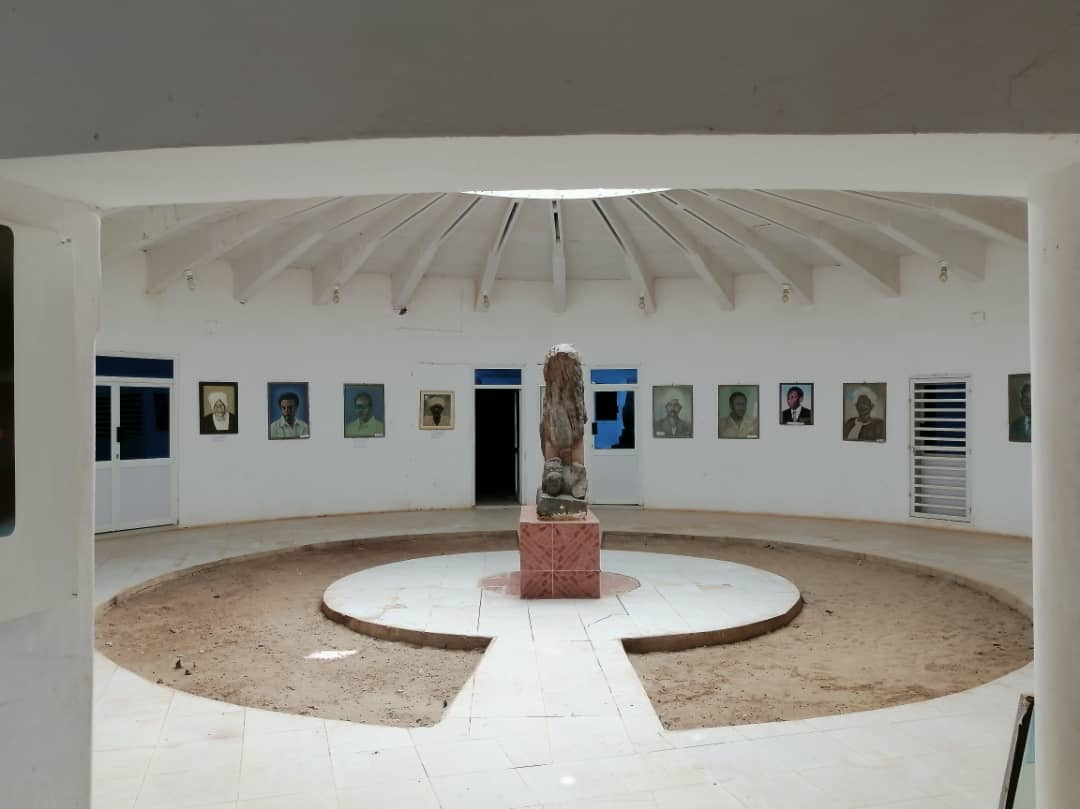
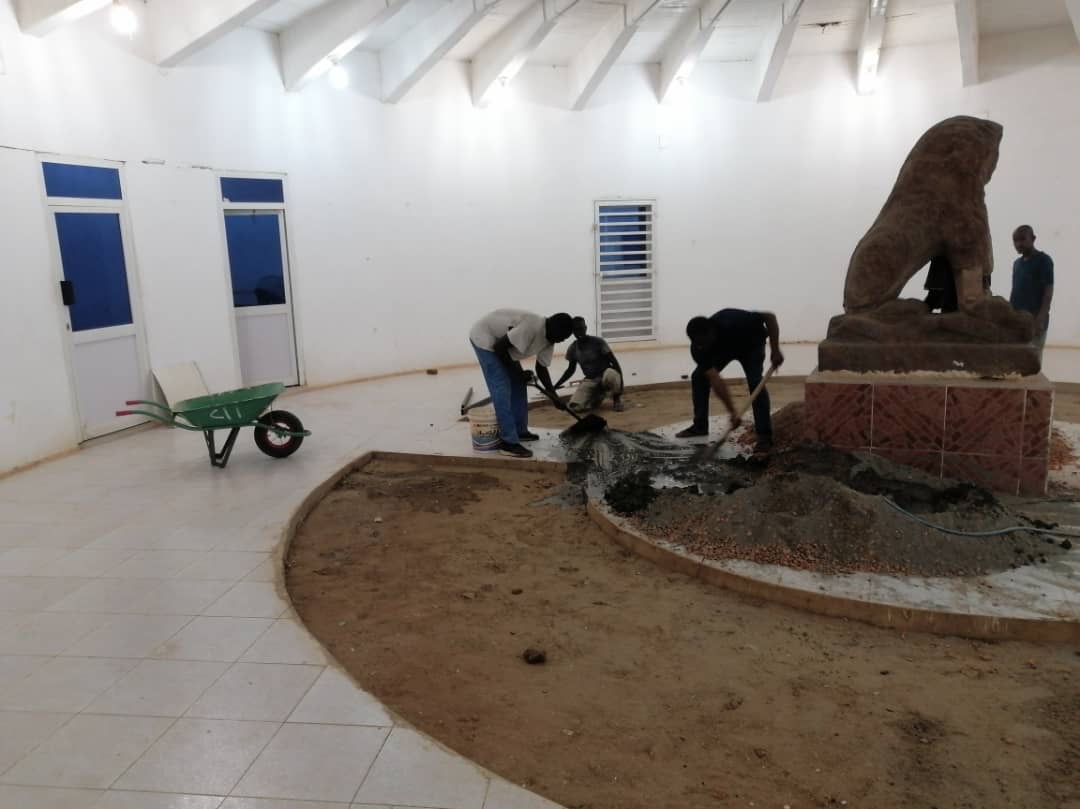
The central rotunda floor was then tiled to create a public event space. Artists began work on a monumental mural for the exterior wall. The museum was being prepared not just as an exhibition space, but as a living community venue.
- Toilet block restoration
- Central floor tiling
- Site preparations and security
- AutoCAD design for tent and garden
Community Buy-in
The Community Shapes Its Own Museum
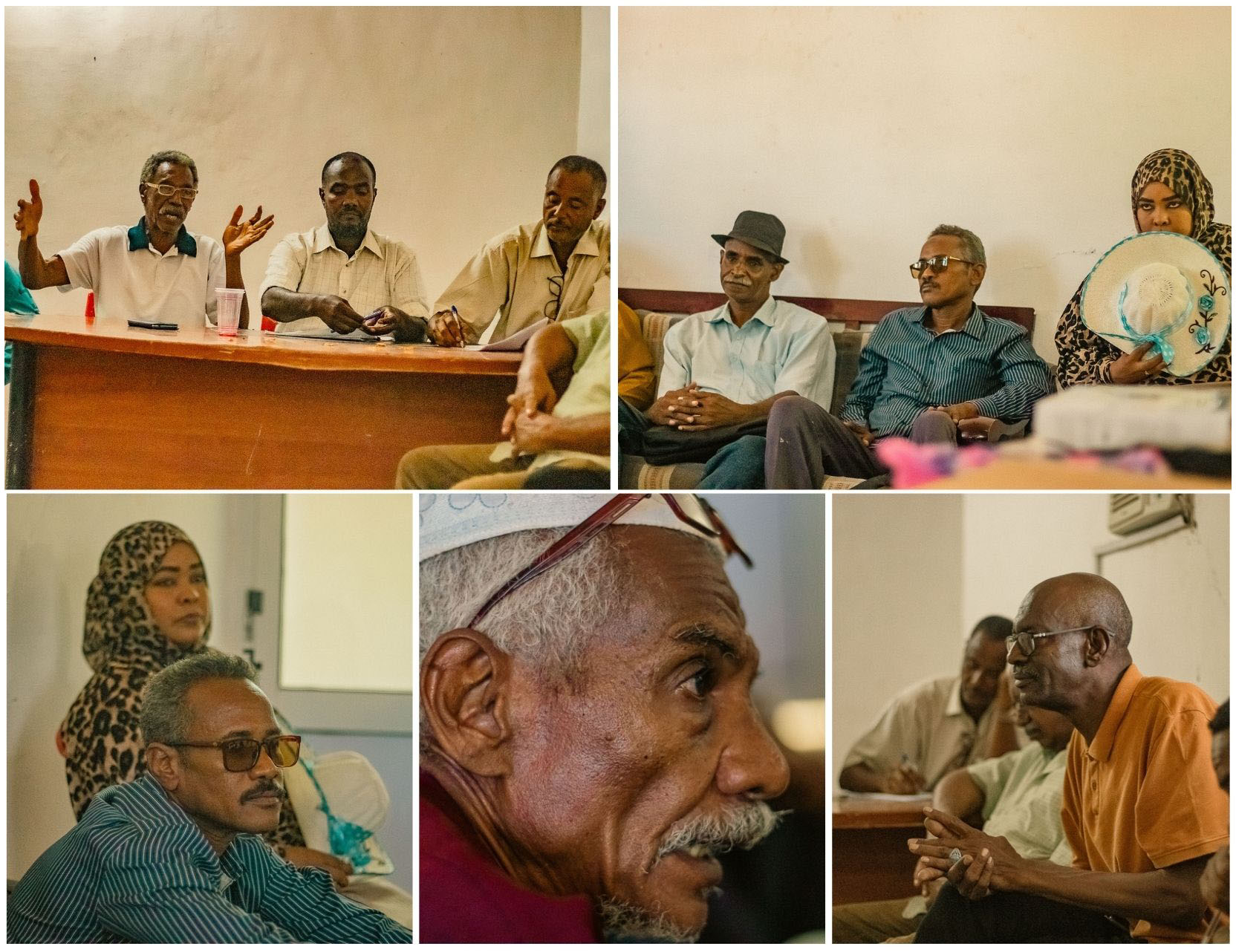
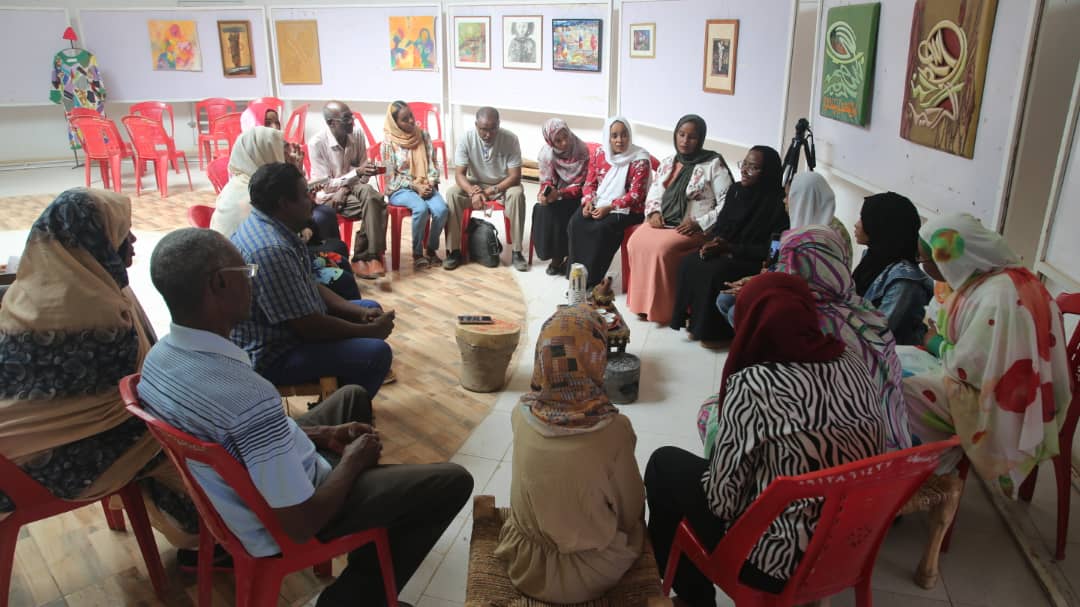
On 16 October, a stakeholder meeting brought together artists, dramatists, journalists, historians, musicians, TV directors, and education ministry representatives. Dr Amani Gashi presented the project vision and invited the community to shape it.
"All events must be in the museum so people can come and know about it."
The community proposed everything — gallery workshops, children's events, weekly forums, a musicians' day, theatre shows, and a traditional craft bazaar. The museum would belong to everyone.
The Moment It Came Alive
Opening Events — November 2023
From 1–11 November, a week of events opened the museum to the public — drawing artists, children, musicians, dancers, craftspeople, and the Sudan Minister of Culture.
November 1
The First Community Event
About one hundred people gathered for the first event — craftspeople, artists, dramatists, children displaced by the war, and Wad Medani residents. The floor had been prepared just hours before.
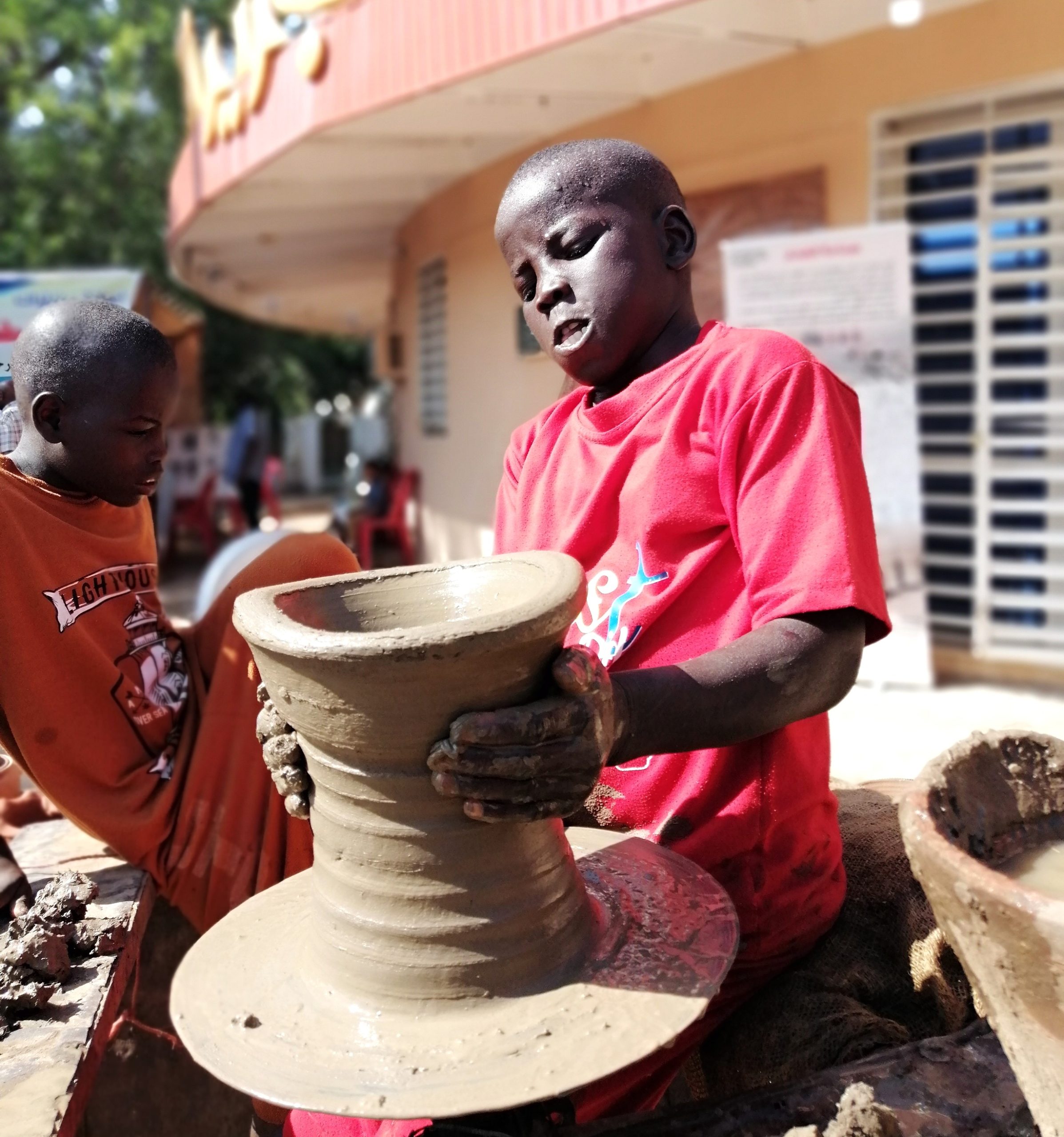
- Artistic workshops for painters and sculptors
- Drama workshop for children connecting them to living heritage
- Display of local youth products and crafts
- Enlightening session launching the project formally
November 5
The Grand Opening — Music, Dance & Community
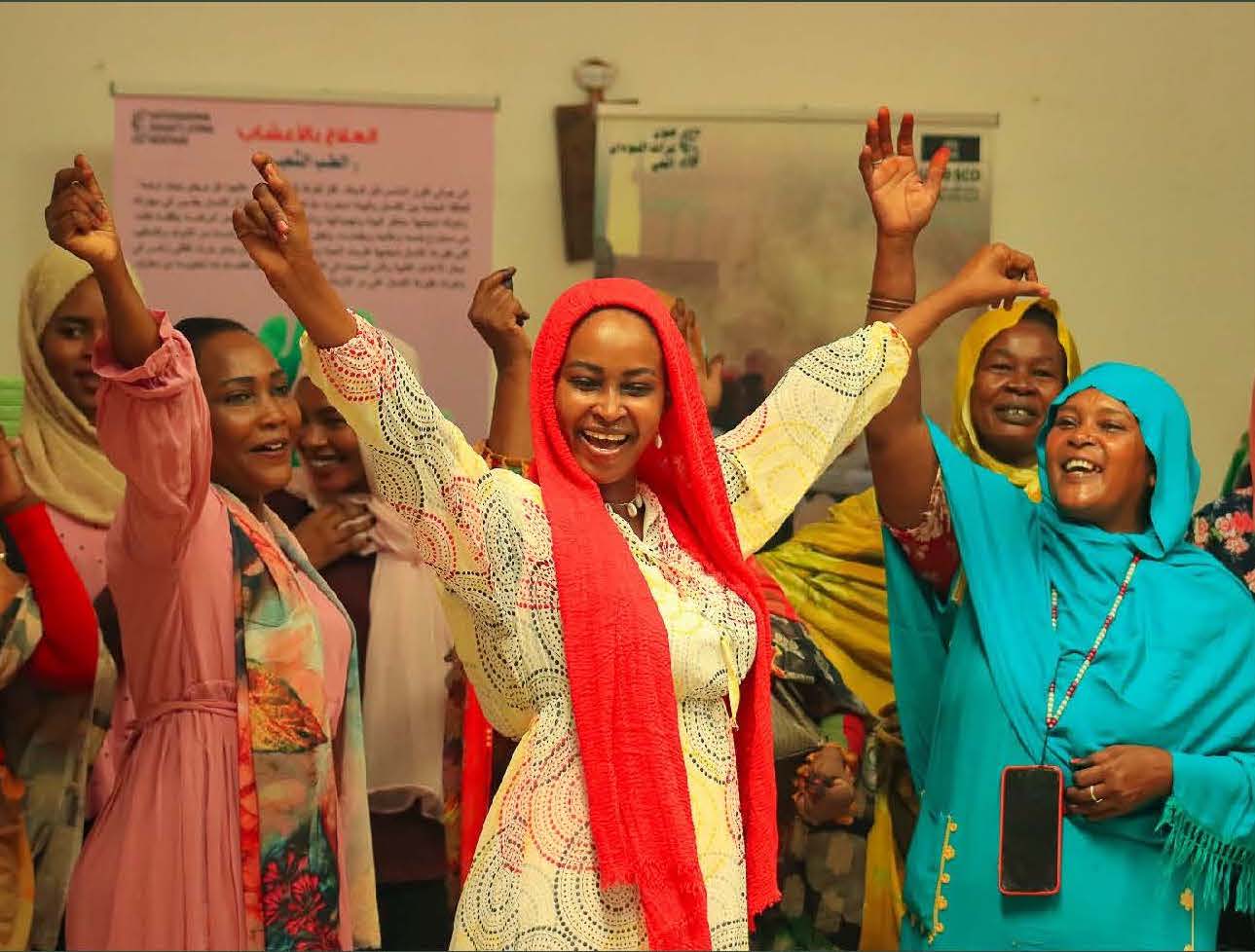
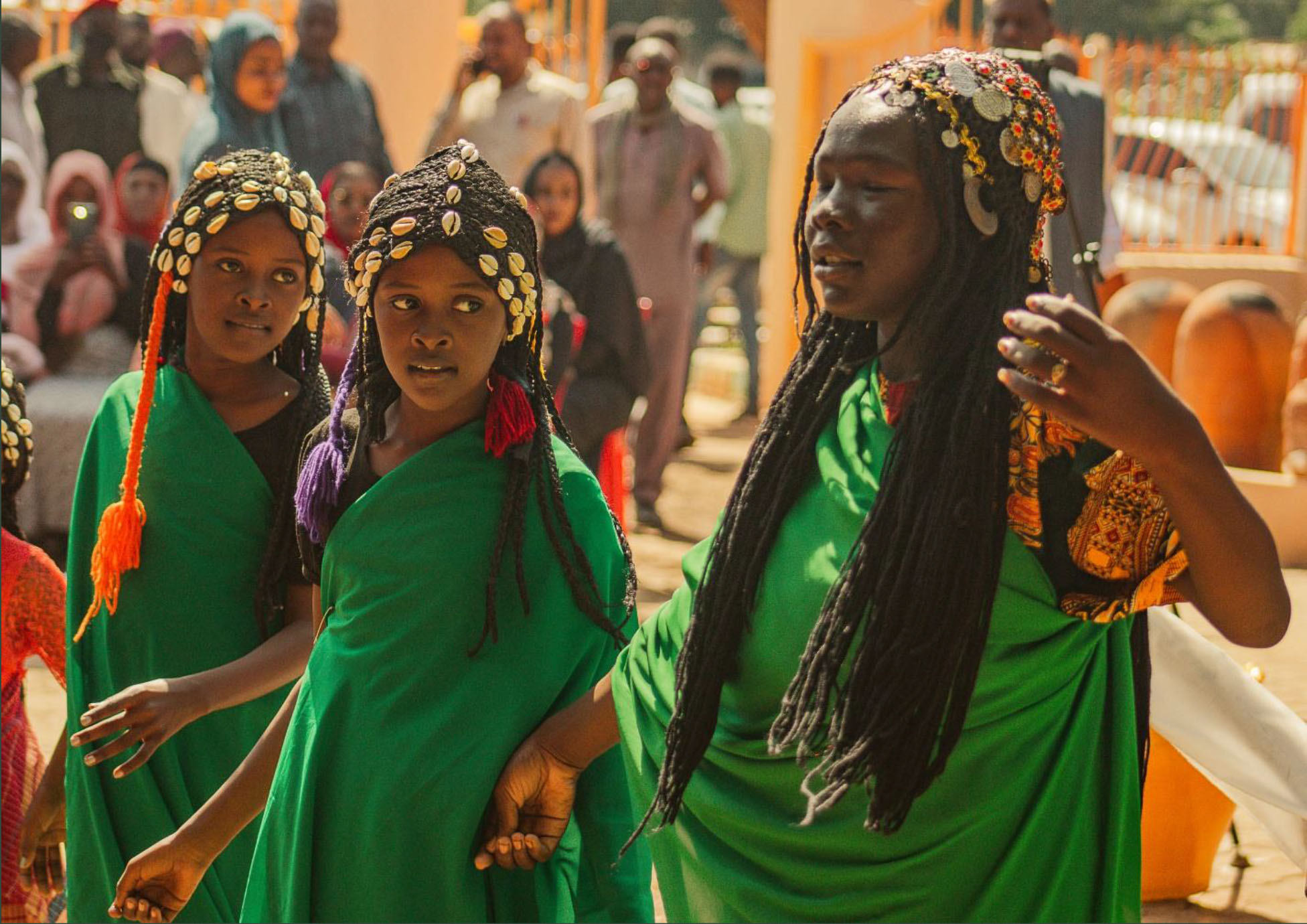
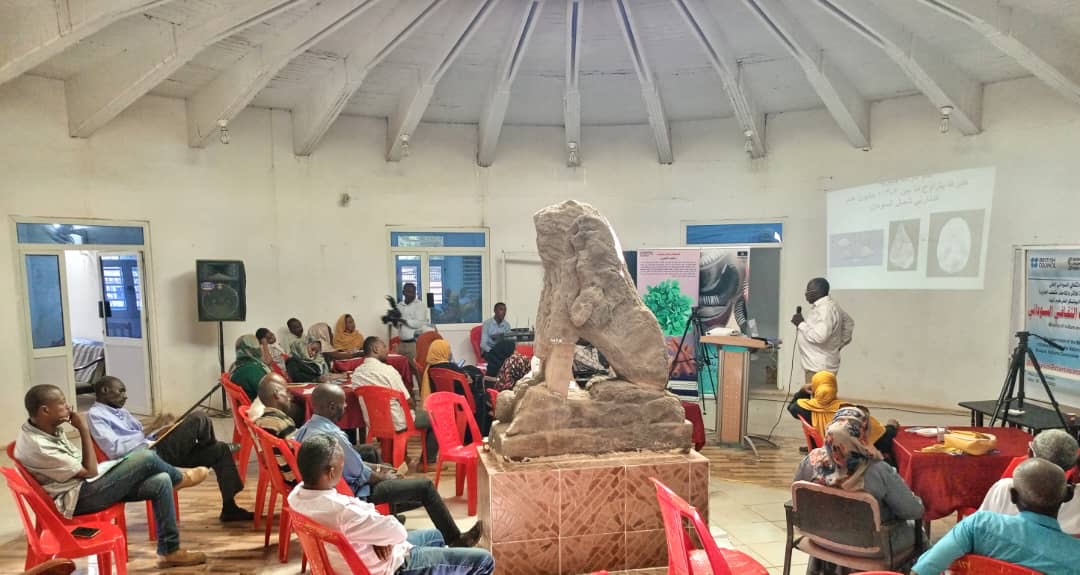
The grand opening on 5 November filled the museum and its gardens. Traditional music and dance performances drew crowds. The rotunda — tiled, lit, and hung with art — was transformed into a cultural heart for the city.
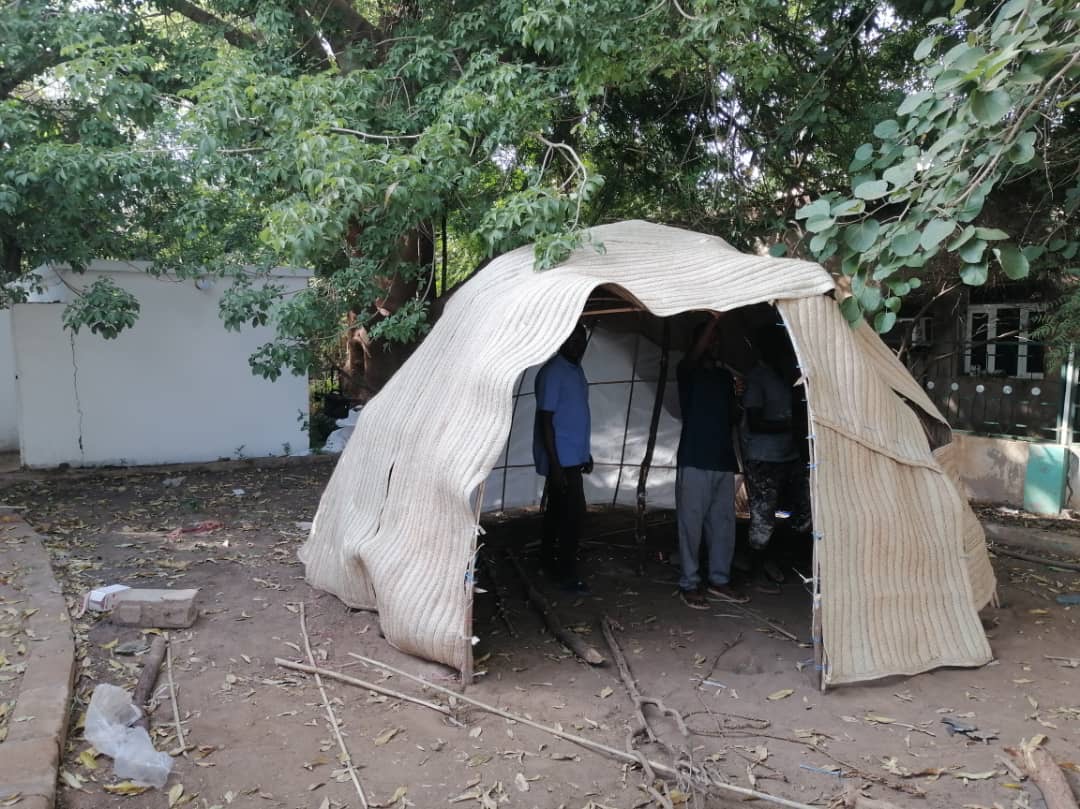
A Beduin tent was erected in the garden. Artists performed. Children danced. The museum was alive for the first time in years.
"Launching the Activities of Safeguarding Sudanese Living Heritage — El Gezirah Museum, 1–5 November 2023."
November 9
Arts for Children
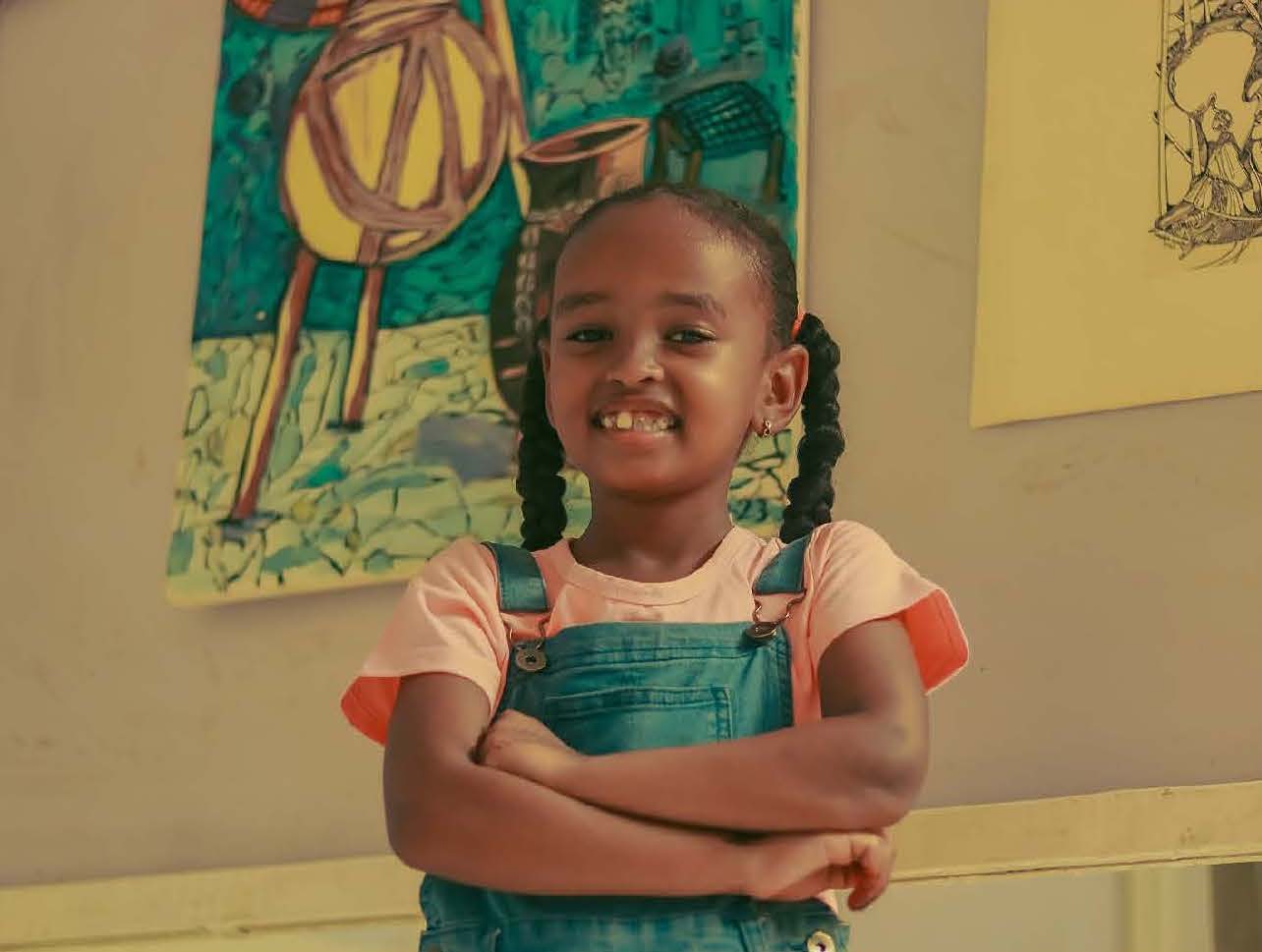
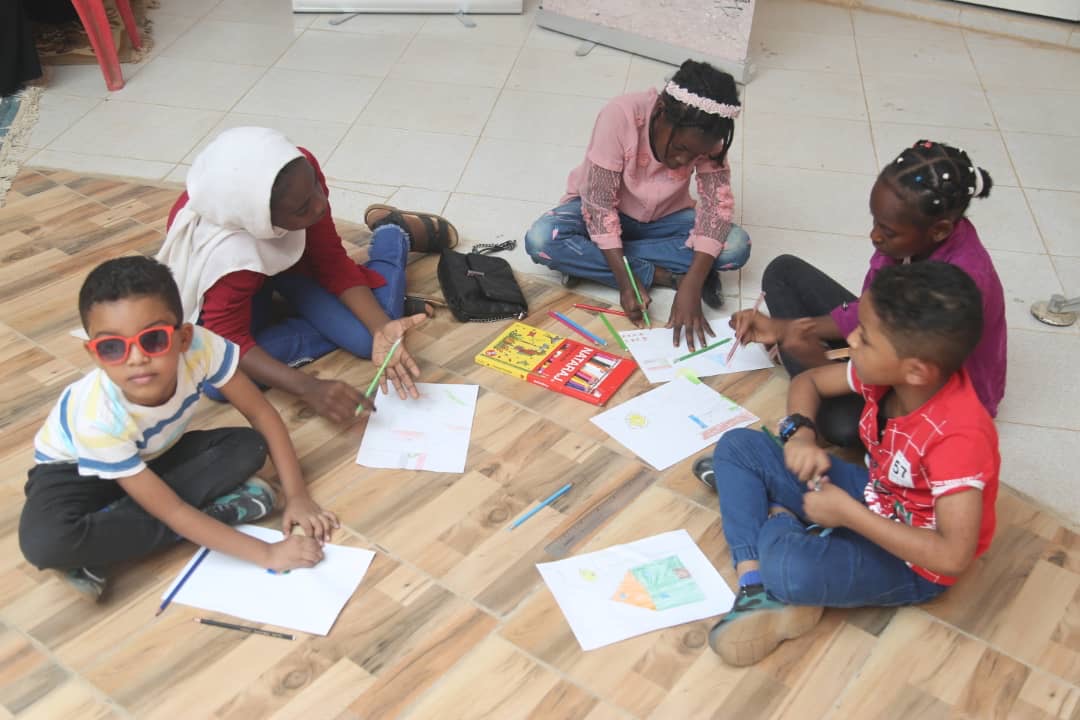
A dedicated children's event brought together young people displaced by the war alongside Wad Medani residents. Children drew, painted, and engaged with heritage objects under artist supervision — connecting them to their cultural identity at a moment of profound displacement.
The children's programme was continued on 22 November with heritage songs, a craft workshop (????? ????), and a performance of "??? ???????" — a theatrical piece about memory and hope.
November 26
Ministerial Visit & Heritage Exhibits
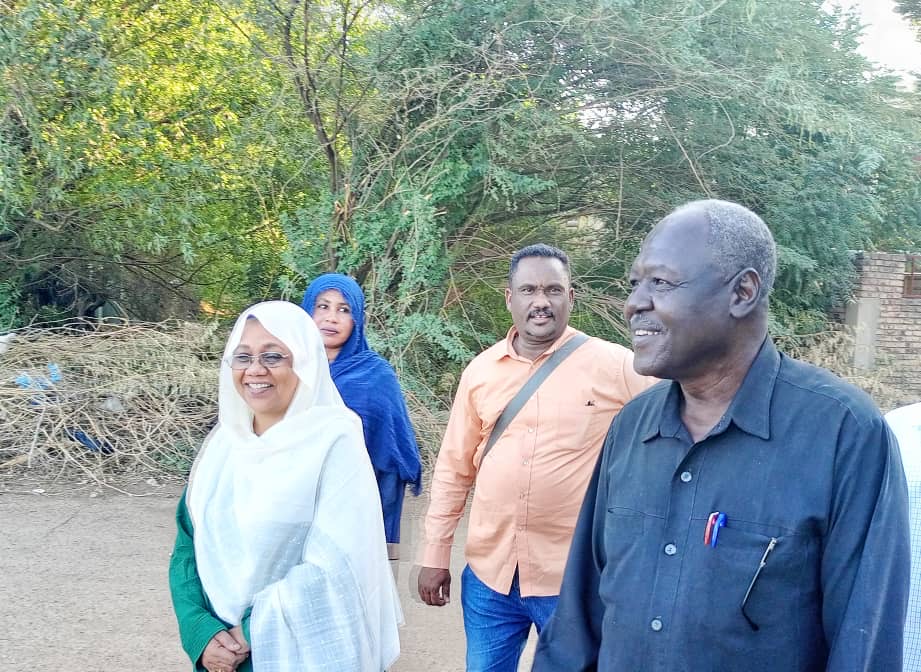
The Sudan Minister of Culture and Information visited the museum on 26 November, followed by a visit from El Gezirah State and Wad Medani community leaders on 4 December. Both visits brought national recognition to the project.
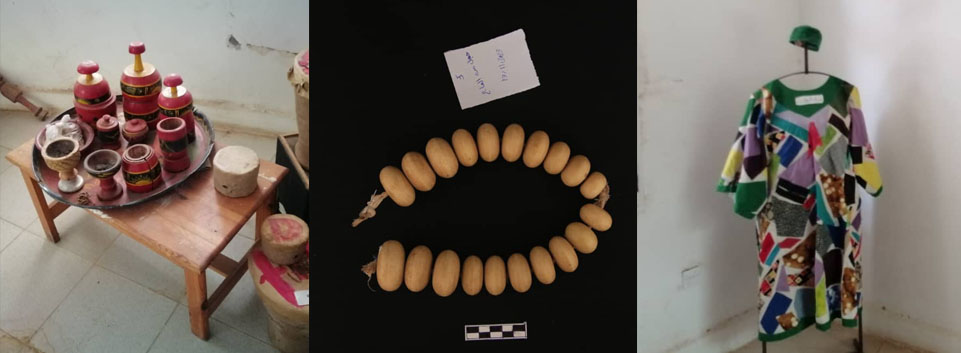
Heritage exhibits were installed and documented across the museum's rooms — covering art, perfumes and music, wedding traditions, handcraft, living heritage, and archaeology. On 12 November, a citizen of Wad Medani donated personal collections to the museum as gifts.
- Art Exhibits room
- Perfumes & Music display
- Wedding Heritage room
- Handcraft & Living Heritage
- Archaeology collection
Recovering the Past
Heritage Research & the Mural
While events filled the museum, archival research recovered Wad Medani's visual history — and artists carved a permanent mural into the city's fabric.
Durham Archive
Recovering Wad Medani's Visual History
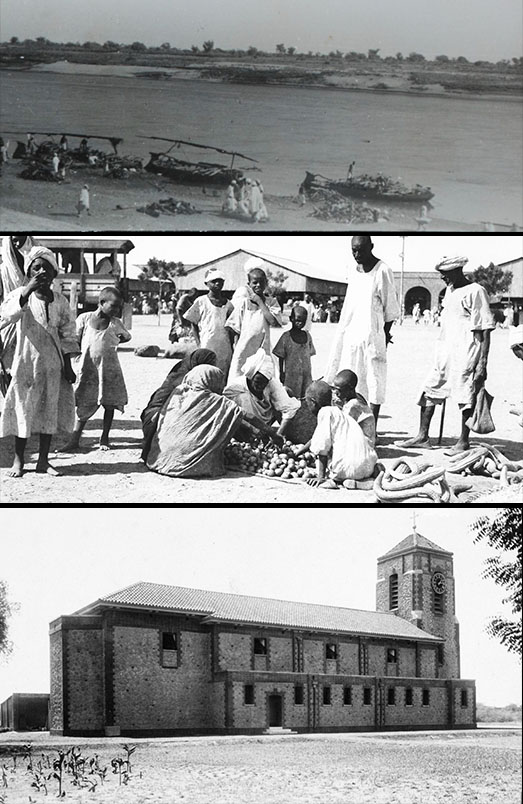
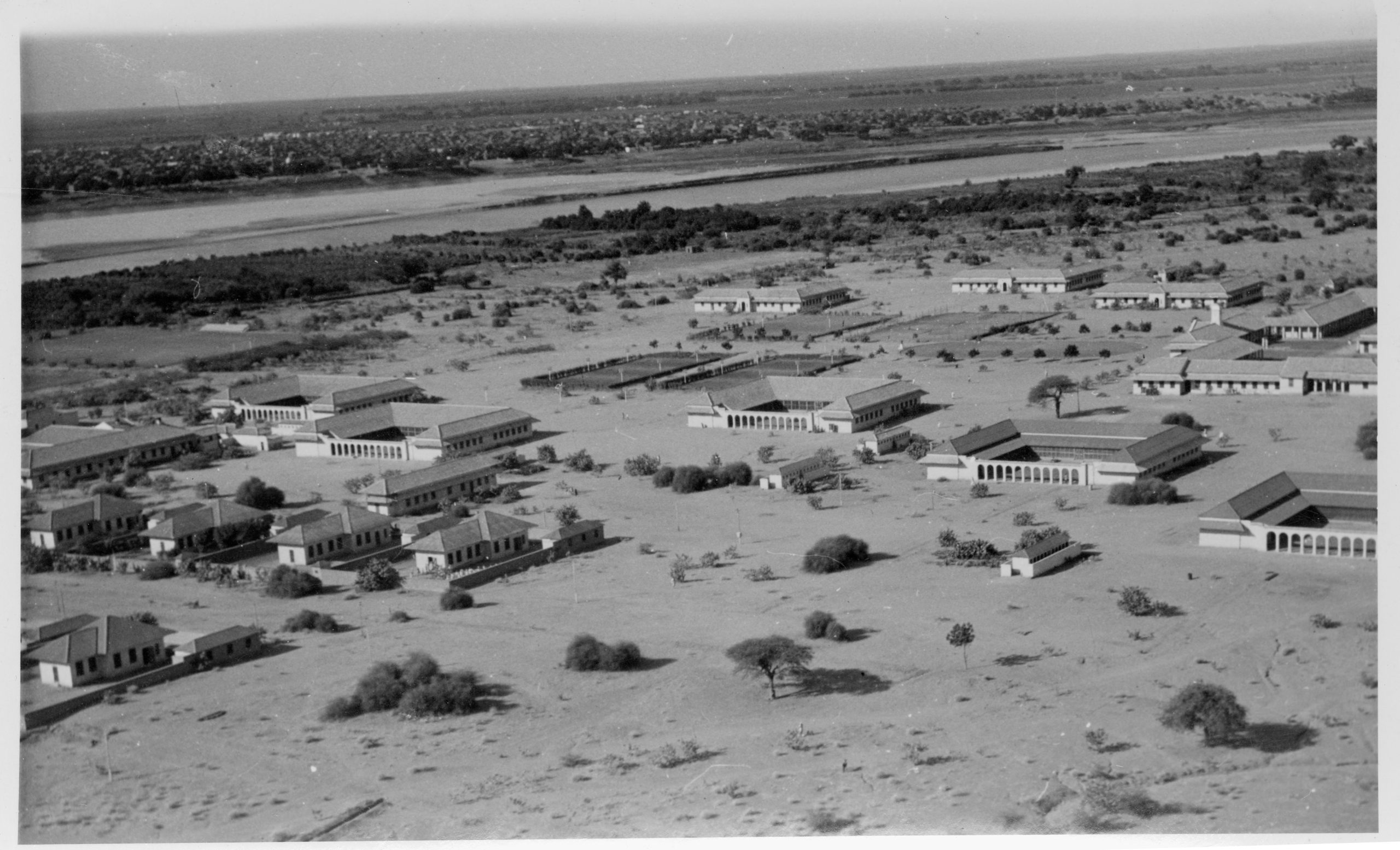
On 30 October, SSLH researchers accessed the Durham University Archive to recover historical photographs of Wad Medani — images that many residents had never seen. Wad Medani Church, Hatnub School, the Blue Nile river front, the market, and the Governor's Palace were all documented.
Historic city plans were also recovered, showing the urban layout of Wad Medani across different eras. These materials were prepared for display in the museum's heritage rooms.
ICH Workshop
Intangible Cultural Heritage — 28–30 November
A three-day Intangible Cultural Heritage workshop was held at the museum from 28–30 November. Led by Dr Abdelrahman Ali, the workshop brought together participants to document, classify, and safeguard Sudan's living heritage traditions.
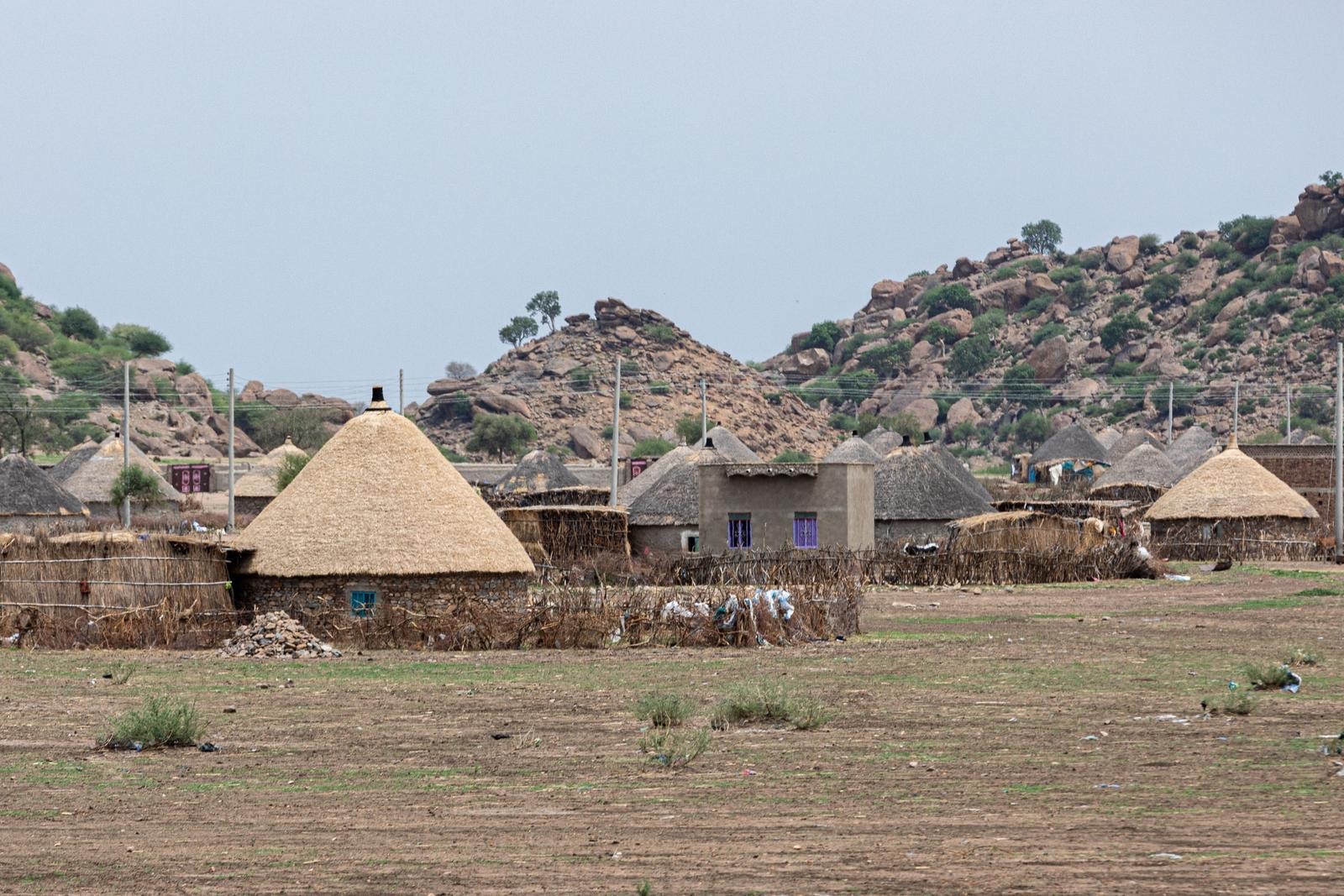
The workshop covered hut circle settlements at El Faw Mountains, living heritage locations across El Gezirah State, and practical methods for community-led ICH documentation and database creation.
"Conversations of safeguarding cultural heritage — future of our museums."
The Mural
Community Artwork
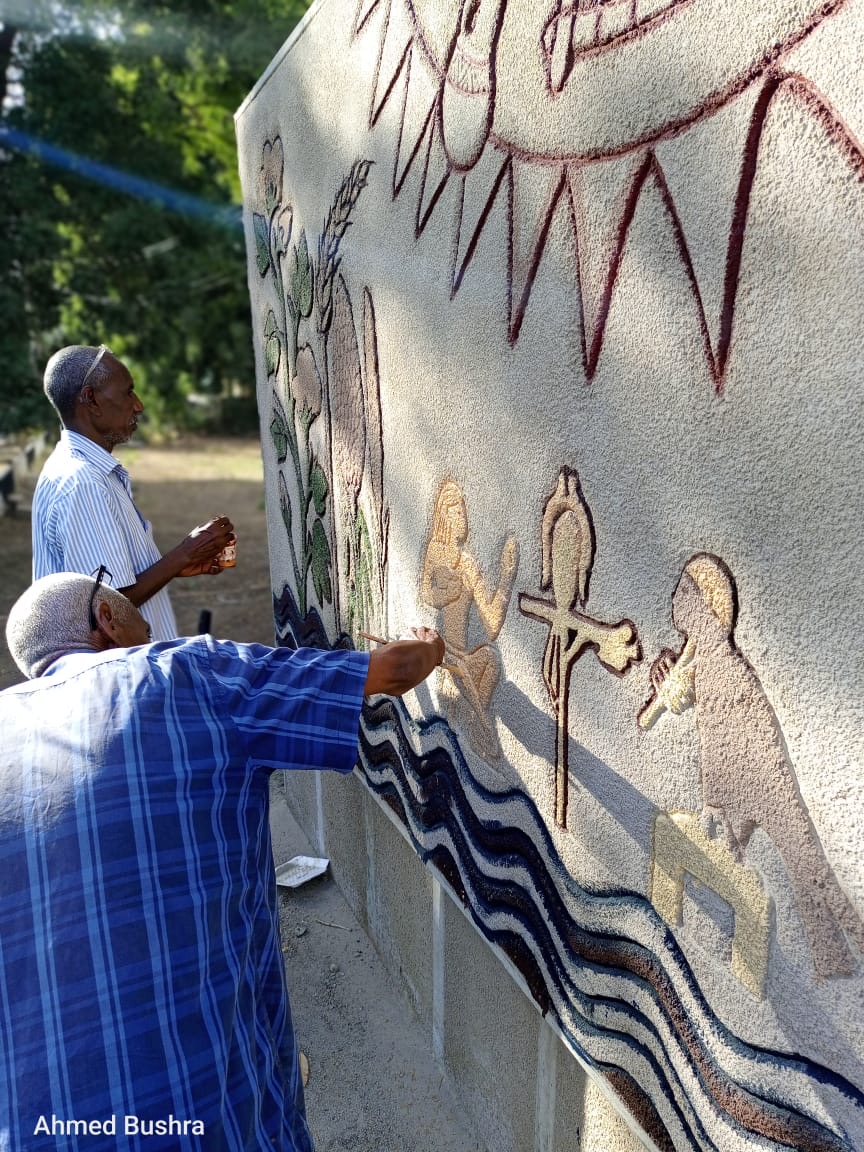
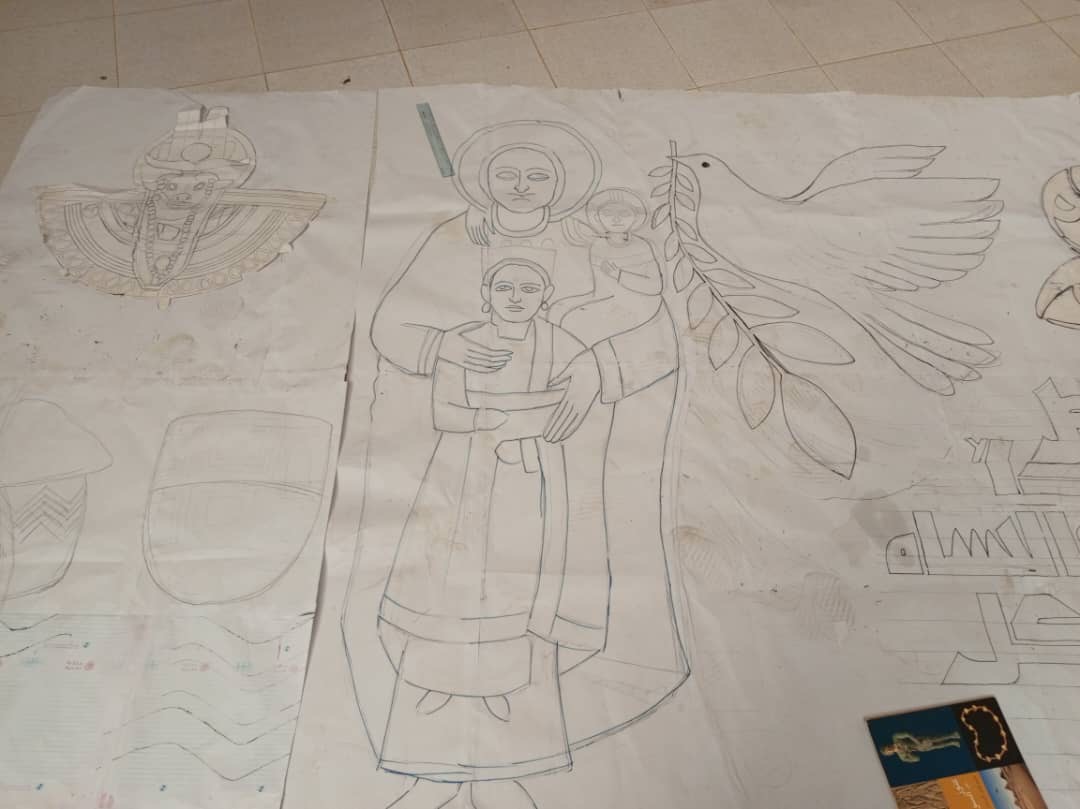
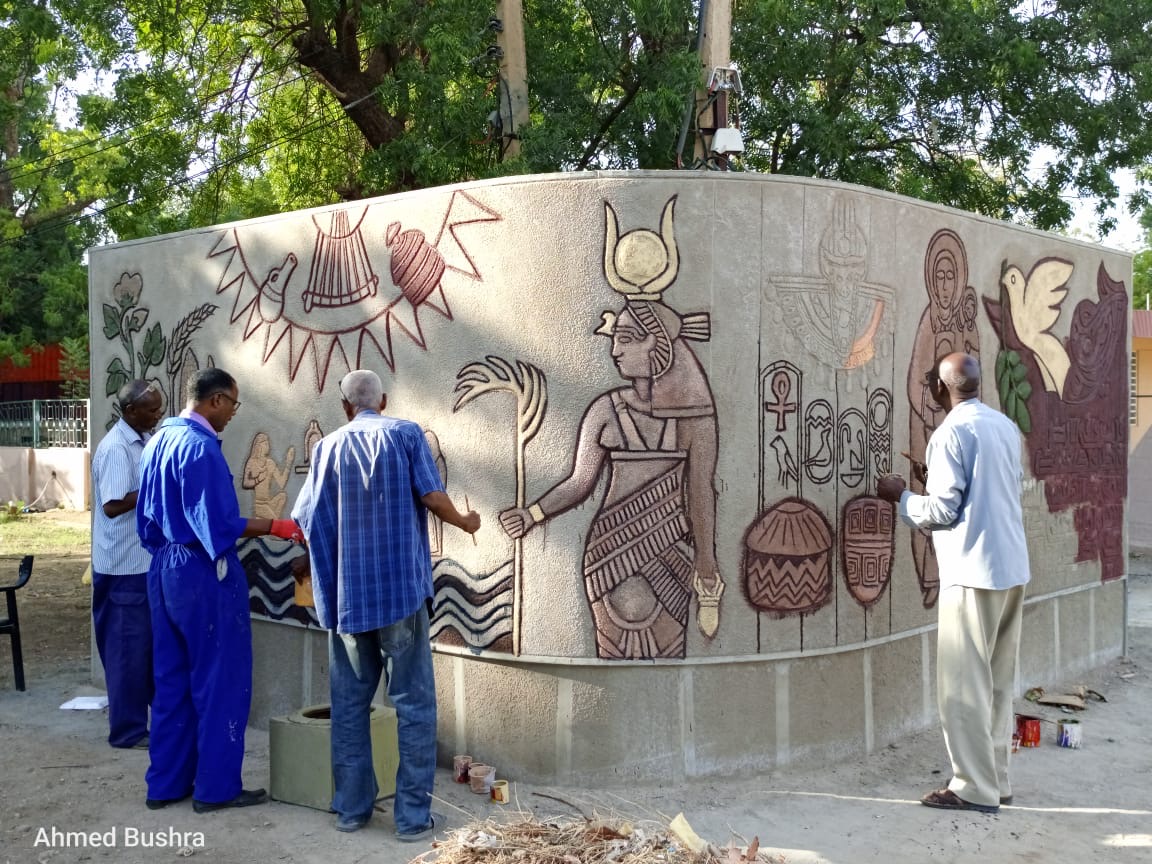
From 24 November to 6 December, a group of Sudanese artists worked as a team to carve and paint a monumental mural on the museum's exterior walls. Drawing on Sudanese ancient iconography — pharaonic imagery, Nile symbols, figures of heritage — the mural transformed the museum's street presence entirely.
The work took twelve days. It remains a permanent public artwork visible to all who pass the museum.
Six Months · One Timeline
Key Events & Milestones
From the outbreak of war to a fully operational community museum — a complete timeline of the project from April to December 2023.
Partners & Contributors
What Was Achieved
A Museum That Belongs to Everyone
In six months, a closed museum became a functioning community cultural centre — built by the displaced for the displaced, and now embedded in the life of Wad Medani.
- Physical RestorationBathrooms, tiled floor, tent, and garden — the museum became fully usable for public events.
- Permanent ArtworkThe monumental mural gives the museum a permanent public presence on the streets of Wad Medani.
- Community OwnershipEvery programme element — from events to exhibits — was shaped by the community in the October stakeholder meeting.
- Heritage DocumentationCollections catalogued, Durham archive photographs recovered, ICH database begun with university volunteers.
- Children at the CentreMultiple events specifically brought displaced and resident children together through art, drama, and heritage.
Project Vision
"Sudan is a country of remarkable cultural diversity. Even in crisis, its communities have the capacity to protect and celebrate their heritage — and to find in that celebration a source of unity, hope, and resilience."
— Dr Amani Gashi
SSLH Coordinator & Ethnographic Museum Director